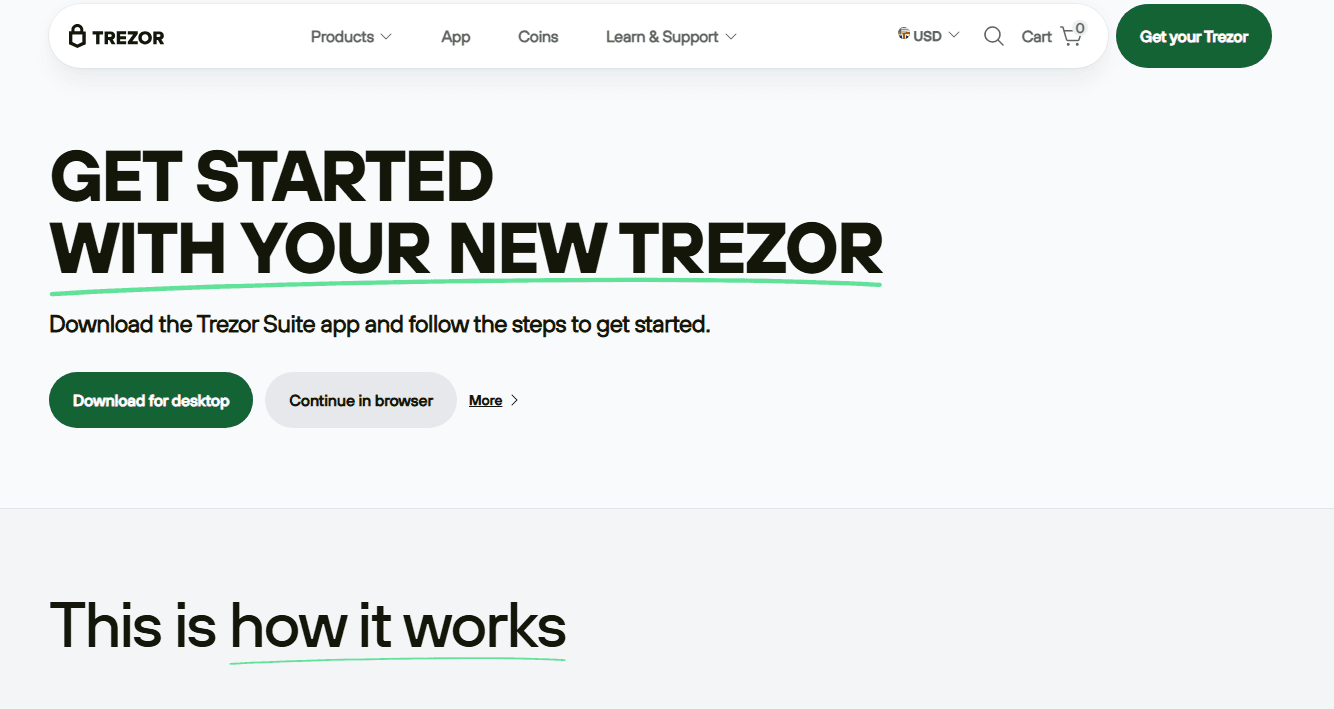
Trezor.io/start: A Comprehensive Guide to Safely Setting Up Your Cryptocurrency Wallet
Cryptocurrency has transformed how we think about money. Unlike traditional banking, owning crypto gives you full control—but it also places responsibility squarely on your shoulders. If your wallet is compromised, there’s no bank to reverse transactions. That’s why hardware wallets, like Trezor, are essential for securing your digital assets.
The official starting point for using your Trezor device is Trezor.io/start. This portal is designed for new users, guiding you step by step from unboxing your device to securely managing cryptocurrencies. This guide explains the setup process, security considerations, wallet management, and advanced practices to ensure your funds remain safe.
Understanding Trezor.io/start
Trezor.io/start is the official Trezor website for initiating your hardware wallet. Its main purposes include:
Guiding you through wallet setup
Downloading the official Trezor Suite software
Providing instructions for wallet recovery
Offering guidance for firmware updates
Educating users on security best practices
Essentially, it’s the first step in safely using your Trezor device.
Unboxing Your Trezor Device
Before visiting Trezor.io/start, familiarize yourself with your hardware wallet package. Typical contents include:
The Trezor Wallet – Either Trezor One or Trezor Model T
USB Cable – For connecting the wallet to your computer
Recovery Seed Card – For writing down your 12–24 word recovery phrase
Instruction Booklet and Security Stickers – To verify the device’s authenticity
Pro Tip: Inspect the packaging carefully. Do not use the device if it appears tampered with. Security starts from the moment you receive your wallet.
Step 1: Accessing Trezor.io/start
Open your web browser and go to Trezor.io/start.
Follow the link to download Trezor Suite, the official software for managing your crypto assets.
Choose the appropriate version for your operating system (Windows, macOS, or Linux).
Security Tip: Avoid third-party websites to prevent downloading malicious software. Only use the official Trezor portal.
Step 2: Installing Trezor Suite
Trezor Suite is the software interface for your hardware wallet. It allows you to interact with the blockchain safely.
Desktop Installation: Run the installer and follow the instructions.
Web Version: You can also access Trezor Suite via browser if preferred.
Connect your Trezor wallet via USB. The software will automatically detect the device and guide you through the setup process.
Step 3: Initial Wallet Setup
When connecting your device for the first time, you can either:
Create a New Wallet
Generates a new recovery seed
Allows setting up a PIN
Optionally add a passphrase for extra security
Recover an Existing Wallet
Enter your existing recovery seed to restore access
Ideal if replacing or upgrading your device
Security Reminder: Always complete sensitive steps on the hardware device, never on a computer or online platform.
Step 4: Writing Down Your Recovery Seed
The recovery seed is the master key to your crypto.
Write down each word carefully on the recovery card.
Store the card in a safe, secure location.
Avoid storing the seed digitally or online.
Without this seed, your funds cannot be recovered if the device is lost, stolen, or damaged.
Step 5: Creating a PIN
A PIN protects your wallet against unauthorized access:
Enter a 4–6 digit PIN directly on the Trezor device.
Each time you log in, the number pad is randomized to prevent keylogging.
This ensures physical access alone is not enough to compromise your wallet.
Step 6: Updating Firmware
Firmware updates are crucial for security and functionality:
Trezor Suite notifies you when a firmware update is available.
Confirm the update directly on the device.
Never skip updates, as outdated firmware can expose vulnerabilities.
Step 7: Using Trezor Suite
Trezor Suite enables you to:
Send and Receive Cryptocurrency: Generate addresses for deposits, send funds, and verify transactions on-device.
Monitor Portfolio: Track balances, transaction history, and asset performance.
Manage Multiple Accounts: Add wallets for different cryptocurrencies and organize addresses efficiently.
Install Blockchain Apps: Access supported cryptocurrency applications directly through Trezor Suite.
All private keys remain securely offline, reducing exposure to malware and online attacks.
Step 8: Understanding Security Features
Trezor devices offer multiple security layers:
Offline Key Storage: Private keys never leave the device.
Transaction Verification: Each transaction requires physical confirmation.
Optional Passphrase: Provides an additional layer of protection.
Device Authenticity Check: Confirms the hardware is genuine.
Following these features ensures a secure crypto management environment.
Step 9: Wallet Recovery
If your device is lost or damaged:
Acquire a new Trezor device.
Open Trezor Suite.
Select Recover Wallet and input your recovery seed.
Access to all accounts, balances, and transaction history will be restored.
The recovery seed is essential; losing it means losing access to your funds.
Step 10: Supporting Multiple Cryptocurrencies
Trezor Suite supports a wide range of cryptocurrencies, including:
Bitcoin (BTC)
Ethereum (ETH)
Cardano (ADA)
Solana (SOL)
Thousands of ERC-20 tokens
You can manage multiple accounts for different coins, all from a single interface, simplifying portfolio management.
Step 11: Advanced Security Practices
Enable a passphrase in addition to the PIN.
Store your recovery seed offline in multiple secure locations.
Always verify addresses before sending funds.
Keep firmware and Trezor Suite updated.
Only use official Trezor platforms and apps.
These practices help prevent theft, malware attacks, and accidental loss.
Step 12: Troubleshooting Common Issues
Device Not Detected: Ensure it’s unlocked, try a different USB port or cable.
Forgot PIN: Multiple incorrect attempts will reset the device. Use the recovery seed to restore access.
Firmware Problems: Update via Trezor Suite only.
Connection Errors: Switch cables, USB ports, or browsers.
Following these steps ensures smooth operation.
Step 13: Using Trezor on Mobile
Trezor Suite can be accessed via mobile browsers for convenience:
Check balances and portfolio performance
Initiate transactions
Confirm all transactions physically on the hardware device
This allows users to manage crypto securely while on the go.
Step 14: Frequently Asked Questions
Can I use Trezor Suite without a Trezor device?
No. The hardware wallet is required to keep private keys offline.
Is Trezor.io/start cloud-based?
No. It only provides downloads and guidance. All sensitive data remains offline on your device.
What happens if I lose my recovery seed?
Without it, your funds cannot be recovered.
Can I manage multiple wallets at once?
Yes. Trezor Suite allows multiple accounts and cryptocurrency types.
Step 15: Tips for Beginners
Begin with small test transactions.
Back up your recovery seed in multiple secure locations.
Keep Trezor Suite and firmware updated.
Never share your PIN, passphrase, or recovery seed.
Step 16: Conclusion
Trezor.io/start is the official launchpad for securely using your Trezor hardware wallet. Following its guidance ensures:
Private keys remain offline and secure
Transactions require device verification
Multiple cryptocurrencies can be managed efficiently
Recovery is possible via your seed in case of device loss